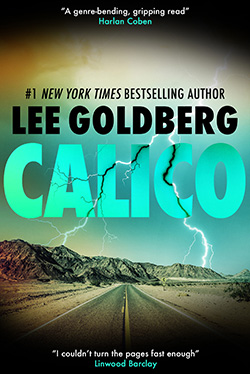
My new thriller CALICO, a genre mash-up that (to my relief) is getting fantastic reviews, is out today. But that’s not all. I’m all ove the Internet, writing essays about the book and doing interviews to explain myself…and my decision to write this seemingly sharp departure from my usual work.
Today, in CrimeReads, I out myself as a closeted wesstern writer.
I decided to do it by writing a gritty western set in 1883 in the Mojave desert mining town of Calico, which is now a cheesy roadside attraction off the I-15 between Los Angeles and Las Vegas. It’s actually a notion I’ve had in the back of my mind for years…maybe even decades.
But there have been a thousand westerns. What could I bring to the genre that nobody else had? How could I make it my own?
The answer was obvious: I’d use the novel to reconcile my creative, split personality. And I’d do that by combining a seemingly traditional western with a present-day crime novel… a seemingly straight-forward police procedural set in the Mojave in 2019.
Notice the repetition of the word seemingly in the previous paragraph.
That’s because, to truly make it mine, I’d have to acknowledge the tropes of both genres…and then ruthlessly subvert them. That’s my brand, or so I am told, exemplified by my “Ian Ludlow” trilogy of spy novels (True Fiction, Killer Thriller, and Fake Truth)
What would connect the two storylines?
The answer was easy.
They would share the same corpse.
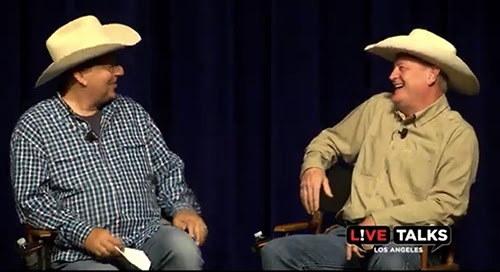
And I visited my friends at Rogue Women Writers to talk about how I wrote the book:
When you read a contemporary police procedural or a period western, you go into them with certain expectations about the stories, the characters, and the themes you’re going to find. Those expectations are what defines those very different genres. While some of those tropes are necessary, many of them are tired, ridiculous cliches. I set out with my thriller Calico to honor the tropes of those two genres while twisting them in new ways and bringing them together in a single, propulsive thriller.
And over at The Dossier, I was grilled about how I work.
DOSSIER: When and where do you write, and what kind of environment do you prefer? (Music/silence/ocean-front veranda where sea nymphs emerge from the water to serve you chilled Bollinger and Oreos?)
GOLDBERG: Sadly, no sea nymphs. Just my dog laying on my office couch, loudly licking his ass or barking in a dream.
I do my best writing between 8 p.m and 2 a.m. in my home office. I like to listen to instrumental TV and movie soundtracks while I work (and to drown out the canine farting). If I am writing action, I might listen to Goldfinger (or other Bond scores), The Bourne Identity, or Mission Impossible (mostly Lalo Schifrin’s original TV soundtracks, and a couple of the features). If I am writing “procedural” scenes, I might listen to Jon Burlingame’s excellent collection of Quinn Martin TV series soundtracks (Streets of San Francisco, Cannon, Barnaby Jones, etc), or Jerry Goldsmith’s Police Story, or Morton Steven’s Hawaii Five-O, for example. I have a collection of hundreds of soundtracks to choose from.
I wish I could munch on Oreos and potato chips while I write, but these days it’s Keto Bars and roasted almonds… washed down with Diet Coke.
I hope you enjoy all of that…but, most of all, I hope you will grab a copy of CALICO. It’s a book I’ve wanted to write for decades and I’m so excited to finally have it out there in the world.



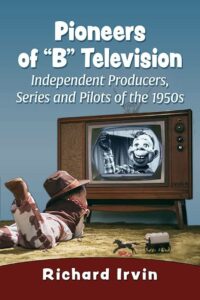 The prolific Irvin continues to mine the corners of TV ephemera for his exhaustively detailed, wonderful unique TV reference books which, as I’ve said again and again, seem to be written just for me. I love his books and wish they’d existed before I wrote my book Unsold Television Pilots back in the 80s. It would have made my research so much easier, and my listings much more informative… particularly in the case of this book. If you’ve always wanted to know more about pioneering TV producers Jack Chertok, Roland Reed, or Edward Lewis, the King of the Backdoor Pilot, this is the book for you. Speaking of back-door pilots, Irvin’s chapter on Movie Star TV Production Companies sounds like a pilot proposal for a series of books aimed, with laser-focus, on my wallet. This is a must-have for any TV reference collection….and for true historians of TV history.
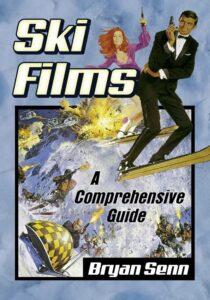 and movie-historians will find the book a fascinating and engaging reference work. I sure did. (As an aside — I can’t believe the notoriously litigious Bond producers haven’t sued McFarland & Co. for using the full poster of ON HER MAJESTY’S SECRET SERVICE as their cover!).
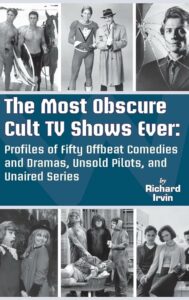 his picks of which shows and pilots and never-aired-series to include seems very arbitrary. It’s not clear what made these particular bombs any more worthy of being remembered than the 100s of others out there. The detailed descriptions of unaired episodes of short-lived become tedious and irrelevant, unless you happen to be one of the very few fans of one of these forgotten shows. I wish, instead, that less information was given on the unaired episodes and more space given to interviews with the writers & producers to give us more details on the creation and failure of these shows…and why they deserve not to be forgotten. That said, I don’t really get the point of this book. While I loved it, because I eat this kind of stuff up, I’m an outlier. I have to admit, as Irvin’s biggest fan, that this is his first misfire, a book that doesn’t strike me as necessary, or particularly useful, TV reference or history book.
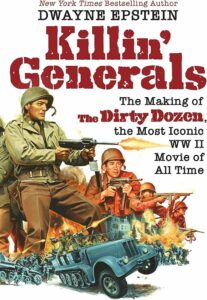 Lee Marvin: Point Blank. Epstein builds his book on his own interviews, but also upon previously published material gleaned from newspapers, actor biographies, and the like. The only drawback to the book are the lengthy, overly-detailed synopses of the novel and each draft of the script, Frankly, I skimmed most of the synopses, though I might go back to re-read those portions of the book if I ever re-watch the movie. I heartily recommend this book to anyone who is interested in film-making, regardless of whether you’ve seen the movie or not.