Canadian author Paul Quarrington has died after a short battle with cancer. He was well-known up north but never got the acclaim he deserved down here. He wrote two of the best and and funniest non-fiction books about fishing ever (Fishing With My Old Guy, From the Far Side of the River: Chest-Deep in Little Fish and Big Ideas )… along with a bunch of novels that have earned him well-deserved comparisons to John Irving and Robertson Davies. I was fortunate to work with Paul for a year on the series MISSING, where he was an odd fit and he knew it. His off-beat humor and literary sensibilities just didn't mesh with a typical Lifetime detective series, which was a shame because he was a hell of a nice guy and a pleasure to work with. He will be missed.
Current Affairs
Santa Royale
The HMSS blog tipped me to this terrific spoof of the CASINO ROYALE pre-credits and opening title sequence.
Just Like the Mail I Get
My old high school buddy Christine Ferreira sent me this hilarious email exchange, which comes frighteningly close to many that I've had with people who'd like me to work for free. Here's an excerpt:
From: Simon Edhouse
Date: Monday 16 November 2009 2.19pm
To: David Thorne
Subject: Logo Design
Hello David,
I would like to catch up as I am working on a really exciting project at the moment and need a logo designed. Basically something representing peer to peer networking. I have to have something to show prospective clients this week so would you be able to pull something together in the next few days? I will also need a couple of pie charts done for a 1 page website. If deal goes ahead there will be some good money in it for you.
Simon
From: David Thorne
Date: Monday 16 November 2009 3.52pm
To: Simon Edhouse
Subject: Re: Logo Design
Dear Simon,
Disregarding the fact that you have still not paid me for work I completed earlier this year despite several assertions that you would do so, I would be delighted to spend my free time creating logos and pie charts for you based on further vague promises of future possible payment. Please find attached pie chart as requested and let me know of any changes required.
Regards, David.
Everything and Nothing

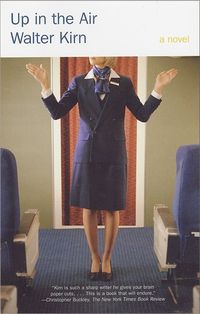 Two things got me thinking today about the challenges of adapting a book to the screen — my friend John Rogers' blog posts on the subject and the movie UP IN THE AIR, which I loved.
I've written a few adaptations over the years, some filmed (eg. Rex Stout's "Champagne for One," "Prisoner's Base" ) some not (eg. Mary Higgins Clark's "The Lottery Winners," Aimee & David Thurlo's Ella Clah novels), some filmed after they were taken over by others (eg. Marv Wolfman's "Blade"), some based on my own books (eg ".357 Vigilante" and "Mr. Monk Goes to the Firehouse,") and some inching tantalizingly towards production (Victor Gischler's "Gun Monkeys").
Some of my favorite book-to-movie adaptations include JAWS, GET SHORTY, GREAT EXPECTATIONS, TERMS OF ENDEARMENT, THE CIDER HOUSE RULES… and now, UP IN THE AIR. You can learn so much by watching the movies and then reading the books (or vice versa, of course).*
What all of my favorite adaptations have in common is that the screenwriters made major departures from the source material and yet still captured the essence of the books and what made them great. Often, the movies actually improve on the source material. JAWS is a good example of that…and so is UP IN THE AIR.
Major changes from the book are inevitable and necessary. For one thing, you're telling a story in two different mediums. As a result, the biggest changes often have less to do with artistic concerns than they do with the realities of production. If you're doing a movie, and not a six hour mini-series, you're going to have to make some hard choice about what to drop and what to condense. To do that, you have to sit down with the book, strip everything away and find the true heart of the story… and then build backward from there, keeping only those characters, moments, and plot strands from the book that support the essence of the tale. Your job isn't to transcribe the book to film (which is what the first HARRY POTTER movie felt like to me), but to write a great movie. In many ways, the book becomes inspiration, rather than something you should follow with slavish devotion. That's especially hard for authors adapting their own books to pull off (read John Irving's excellent memoir of his CIDER HOUSE RULES adaptation for a glimpse at that…and he managed the feat brilliantly).
Whenever I adapt a book, I read it first for pure pleasure and then afterwards ask myself if I liked it or not…and, if so, why? What is the story? What makes it special? What are the defining moments? What is the author trying to say? What is the tone?
If I'm adapting the book for a movie, I also ask myself what are the three acts?
If I'm adapting the book for a TV pilot, I also ask myself, what is the franchise and what are the conflicts that can generate episodes every week?
Then I re-read the book and highlight the key plot moments, the best lines of dialog, and any prose that sets the tone, establishes the theme, or reveals an important detail. At the same time, I also write a broad outline of the story as it exists in the book.
Next, I sit down and decide what the story is that I want to tell. Who are the central characters? What is the essence of the book? And then I write my own outline. Once I am happy with that, I go back and pluck out key lines of dialog or description that I want in the script. And then I start writing.
With "Ella Clah," a CBS pilot, Bill Rabkin & I decided that the most intriguing conflict in Aimee & David Thurlo's series of books was in the heroine's backstory: a female, Navajo FBI agent caught between two worlds, two nations, two ways of life. In the books, she's an ex-FBI agent who leads the Major Crimes Unit of the Navajo Police… so by keeping her an FBI agent, we made a major deviation. But we didn't end there. We gave her a male, Hispanic partner with some cultural conflicts of his own. And we resurrected a character who was killed off before the story started in the first book: Ella's father, a Navajo preacher, who drove around the Rez spreading the gospel, much to the shame of Ella's brother, a traditional Indian medicine man. We did it because we thought those conflicts would give us lots of interesting stories. Ultimately, instead of adapting "Blackening Song" or one of the other Ella Clah novels, we ended up writing an entirely new story but kept the characters true to who they were in the books. The pilot didn't sell, but I'm pleased to say that the authors were as pleased with the adaptation as we were.
With Victor Gischler's "Gun Monkeys," I streamlined everything, dropped the hero's entire family (and the subplots that went along with them), condensed events, and created an entirely new third act that I hoped stayed true to everything that I, and thousands of readers, loved about the Edgar-nominated book. At first, Victor was stunned by the changes but after getting over the surprise, he discovered that he actually really liked what I did (or at least that's what he tells me).
What I'm leading up to with all this is that I think UP IN THE AIR is a brilliant adaptation, one that aspiring writers can and should learn from. And yet, in many ways, it's not an adaptation at all. Let me explain…
Walter Kirn's book is about Ray Bingham, a charming yet emotionally remote guy who spends 322 days a year in the air, going from city-to-city firing people, and is on the verge of reaching a million domestic frequent flier miles, something that only a few others have ever attained. Oh, and he's also a motivational speaker reluctantly facing the prospect of going back home for his sister's wedding. Beyond that, and maybe a dozen lines of dialog, screenwriters Jason Reitman & Sheldon Turner scrapped everything else. Instead, they started from scratch with only the basic premise as a foundation.
It was a brave creative decision. And, I believe, also a necessary one.
They stripped the book down to its narrative studs — its unique voice, its attitude, and its central character. They created a much stronger narrative spine and added two new characters — a young woman at Ray's company who tags along with him on the road because she believes that his job can be done better via webcam and a traveling saleswoman much like himself who offers him no-strings-attached sex and might just be the soul-mate he never knew he was missing.
As different as UP IN THE AIR is from Walter Kirn's book, I would argue that it's a loyal adaptation, a pure distillation of the story's soul that is perfectly suited to the medium in which its being told. In many, many ways, I think the screenplay is a vast improvement over the book. The screen story is more focused, Ray Bingham is more sharply defined, and yet the message, the tone, and the unique point-of-view of the book remain the same.
In the end, virtually nothing from the book made it on the screen. And yet, I would argue that everything from the book is there. And, if you are a writer, accomplishing that contradiction is something to be admired.
UPDATE: I just saw Jason Reitman, who directed UP IN THE AIR, and his father Ivan Reitman, who co-produced it, interviewed together on Charlie Rose… and the story they tell of how the film was developed is very, very different than the one reported earlier in the press. Neither one of them mentioned the earlier scripts by Sheldon Turner and Ted Griffin, nor that Ivan was initially going to direct the movie for Dreamworks before Jason got involved. That said, it was interesting to hear Jason talk about the adaptation. His approach, not surprisingly, is to take what he needs from the source material to make a good movie…and go where-ever his inspiration takes him from there. I forgot to mention earlier that his adaptation of Christopher Buckley's THANK YOU FOR SMOKING is every bit as good as this one and is another terrific example of how to do it right.
===============
*let's not forget the great TV series adapted directly from books, like DEXTER, TRUE BLOOD, REBUS and MORSE (and, dare I say it, NERO WOLFE). You can learn a lot from them, too…even the ones that aren't directly based on the books, but rather the character or the franchise, like BONES, WIRE IN THE BLOOD, and many of the episodes of MORSE. When developing a book into a pilot/TV series, you have an even bigger challenge than you would simply adapting it for a feature. Not only do you want to be true to the essence of the book, and build a three-act structure into the tale, but you also have to develop an open-ended franchise, and the strong central conflicts, that together will become the narrative engine capable of generating 100 episodes. BONES did that brilliantly…so did DEXTER.
Green Screen is Everywhere
You have to see this eye-opening compilation video that shows how inventively and frequently green screen is being used on TV, and not just for big effects sequences, but simple walk-and-talks down a residential street.
Snail Lady
If I wrote about a character doing this, nobody would believe it:
She collected snails, liking their portable hiding place and the impossibility of telling which was male and which was female. She traveled with snails in her luggage and kept hundreds at home. If she was bored at dinner parties, she might get a few snails out of her purse and let them loose on the tablecloth. As she didn’t eat much, she was often bored at dinner parties.
The woman being discussed is Patricia Highsmith.
Where To Find the Oldest Magazines on Earth

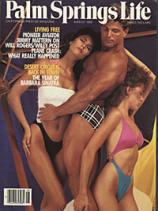 It’ s not unusual to see magazines that are a year or two old in the waiting room at the doctor’s office. But that’s nothing compared to what Alan Barer found in the waiting room at Eisenhower Medical Center in Palm Springs:
On the low table was a copy of the magazine, Palm Springs Life.
Flipping through I glanced at the obligatory page of the movers and shakers at a charity costume gathering. There dressed in western garb with toy six-guns at her sides was cousin Jan.Knowing that Jan had moved from the valley a few years ago, I checked the date.
Unbelievably, the magazine was over twenty years old.
The woman he is referring to, by the way, is my Mom, Jan Curran.
How To Be The Saint on a Limited Budget

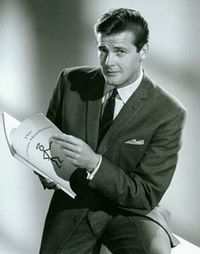
Many thanks to the Davy Crockett Almanack for leading me to The Tainted Archive, and their post on "How to Emulate THE SAINT On A Limited Budget." The tips include:
3- You must maintain an air of mystery. To truly emulate the Saint you must create an aura of unpredictability around yourself. Always get up and hour or so before your young lady and sneak out, not returning sometimes for weeks on ends. Never say where you've been and always counter questions with other questions such as, 'has a bald oriental man been around looking for me?' or 'Life's too short. Let's go eat oysters and sip bubbly.' Another way to become an enigma is to jump up, asking if it's the police every-time the doorbell rings. When you do this slip a hand into your suit pocket as if you are reaching for a non existent gun. Whilst it is understood that some of these things will be difficult for a married Saint – it can still be done. Simply carry out the steps listed above but prepare yourself for divorce proceedings. Disappearing for weeks on end has been known to annoy certain wives.
The Voices in Our Heads
There's a terrific interview with my brother Tod over at The Writers Inner Journey. Here's an excerpt:
"That I am able to ruminate on these rather dark issues for great lengths of time is somewhat disturbing in that I think the difference between what is clinically considered insane and what is clinically considered a writer isn’t that different—we both have voices in our head for prolonged periods of time and, occasionally, have intense conversations with them—but I think the only time I’ve been frightened by an idea was when I didn’t think I knew how to write it or wasn’t confident in my ability to do the story justice."
Preying on Dreams
Author Laura Lippman, who will be MWA president next year, commented on her blog about the reaction among self-published authors to MWA's decision. She wrote:
As the incoming MWA president, I have no voting rights, no role in policy-making. I am the happiest little figurehead you ever did see. But I served two terms on the board and I know how much work board members put into the organization. I also feel genuinely sad that so many self-published writers feel slighted by MWA's policies.No, it's not about merit. It's about professionalism. And while being paid for one's work isn't the only way to be professional, it's an awfully good way to start.
[…]I can't persuade people that MWA's policies are not the equivalent of censorship, that MWA isn't trying to prevent anyone from publishing, much less trying to block their right to self-expression. I'm not sure I can even persuade folks inclined to think differently that self-publishing is not synonymous with vanity publishing. No matter what I say, there are going to be some self-published writers — differently published? — who insist that I belong to MWA because I'm scared of a true free market, in which I would have to compete with all writers, not just those chosen by the — take your pick of adjectives — insular, out-of-touch, arrogant mainstream publishing industry.
This much I can say: MWA didn't change the game. Harlequin did. All the organization did was apply its existing policies to Harlequin's changing business model. And if you can't see how Harlequin's pay-to-publish program is designed to prey on writers and their dreams — well, then I'm not really sure that you're cynical enough to write crime fiction.