After only a week "on the air," novelist Richard S. Wheeler seems to have shut-down his blog, The Iconoclast. It’s a shame, because I was enjoying his posts and looking forward to his ruminations on the state of westerns in publishing today. The blog generated a healthy discussion almost right away with his take on the demise of the midlist. Anybody know why he decided to quit so soon?
My Blog
It’s a Blog. It’s a Book. It’s Both
Bob Sassone, one of our frequent visitors here, is launching a book blog. Er. Blog book. Ah hell, I’ll let him tell you.
"Letters To Martha", my new novel, launches today. I know, I know, you’re
thinking many things. You have a new novel? Martha who? How can a novel
"launch"? And should I ask my doctor about Lipitor? That last one is
between you and your doctor, but here’s the web site for the
book:http://letterstomartha.blogspot.com/
It’s a blog novel. A
novel, because that’s how I originally wrote it, and it’s a blog
because…well, if you haven’t heard they’re all the sa-hizzle with the
hip kids nowadays.There’s a more in-depth answer to the "why put
it online" question. Read it
here:http://sassone.tripod.com/ltminterview.html
This also
fulfills my promise I made to you a year and a half ago, about giving all of
you a free novel as thanks for reading my stuff. It will be updated
every Tues and Thurs with new entries. You can leave comments at the blog
if you’d like (for now anyway – let’s see if anyone abuses that little
feature), and it will run until March/April, just in time for Martha’s
release from the pokey. Let me know what you think.
Why Bother Reading Robert B. Parker?
That’s the question being pondered over at the Crime Fiction Dossier. As I said there, don’t count Parker out yet. He’s still capable of delivering outstanding work (DOUBLE PLAY, the JESSE STONE novels) and the lackluster Spenser books may be disappointing reads, but they make for great audiobooks (with Joe Mantegna as Spenser).
Time Management
My buddy author Gregg Hurwitz talks on his infrequently updated blog about the ordeal of proofing his galleys… and the difficulty juggling the various demands on a writer’s time. He mentions some advice he got from James Patterson Inc:
The exchange was simple:
JP: Do you write on the road?
GH: No, I can’t.
JP (with great gravity): Learn.And
so I have. Now when I’m working on a rough draft, I won’t let anything
short of an emergency interrupt it. I write on planes, in hotel rooms,
in the car (no, not when I’m driving).
I write anywhere and everywhere. Writing for TV trained me to do that, particularly when you’re in production and jetting off to locations in Vancouver, Toronto, Orlando, New York, Boston or London, as I have done. I have no problem writing in a hotel room or on an airplane…and often had no choice if I was going to meet the shooting schedule. Great motivator, the shooting schedule.
That said, writing on an airplane… especially in coach class… took some getting used-to. In first class, there’s some space between you and your fellow passenger. In coach, they are looking right over your shoulder and at every word you type on screen. They can’t help themselves. It’s like a TV set. It’s very hard to write when a complete stranger is watching you do it, especially if what you’re writing involves sex or violence. I’ve had to learn to just tune out the stranger and go for it.
Michael Avallone
The tie-in talk here and on other blogs has blossomed into several discussions and remembrances of the late Michael Avallone, author of many tie-ins as well as the Ed Noon detective novels. Here’s a sampling of the what’s being said.
Over on James Reasoner’s blog:
All this makes me think of the original King of the TV Tie-in Novel. Max Allan Collins probably has that title today, but in the Sixties it was Michael Avallone who turned out more tie-in novels (and movie novelizations) than anybody else. The first Avallone novel I ever read, in fact, was a TV tie-in: THE MAN FROM U.N.C.L.E. He also wrote novels for THE GIRL FROM U.N.C.L.E., THE FELONY SQUAD, HAWAII FIVE-0, MISSION: IMPOSSIBLE, MANNIX, THE PARTRIDGE FAMILY (some of Avallone’s best-selling books, in fact, were Partridge Family novels), and
probably other series that I’m forgetting at the moment. When I read Avallone’s MAN FROM U.N.C.L.E. novel (bought brand-new off the paperback rack at Buddie’s Supermarket) as a 12-year-old, I realized
for the first time that a writer could have such a distinctive voice that his work can’t be mistaken for anyone else’s. And I liked that voice well enough so that for a long time after that, I picked up every
Avallone novel I came across.
Over on Ed Gorman’s blog:
My all time favorite Avallone story concerns a piece he wanted to
write for Mystery Scene about his friend Cornell Woolrich. I’d been dealing with Mike for several years so I knew the pitfalls. He wrote me a query letter about the Woolrich piece and I wrote back and said All
right, Mike, but just remember the disagreements we’ve had in the past. Make this piece about Woolrich and not about you.Couple weeks later the piece comes in and it starts off very well. Here comes Avo up to Woolrich’s shabby little hotel room, they have a beer and talk, and then Avo says, Cornell, I want to interview you.
To which Cornell allegedly says, Mickey, I’m tired of being interviewed. Let’s talk about you.
So, according to Avo, the night turns into a love fest about the genius of one Michael Avallone. The whole freaking piece is Avo talking about himself.
There’s more, much more, to this funny story and I encourage you to visit Ed’s blog and read it.
Meanwhile, over on Bill Crider’s blog:
My own favorite Avo tale is that when he made a list of the Top Ten Private-Eye Novels of All Time, he put two of his own books on it. As I recall, however, he did modestly give Raymond Chandler the #1 position.
I don’t have any stories about Avallone to share, I only met him once at a paperback book show. I did read one of his original novels once… THE SATAN SLEUTH… but I don’t remember a thing about it beyond it’s cheesy title.
Ten Mistakes Times Two
Thanks to Deborah O’Toole, who pointed me to a helpful article by Pat Holt on the ten mistakes writers often make in their writing without being aware of it. Here the she talks about a particularly irksome "empty adverb" —
The word "actually" seems to emerge most frequently, I find. Ann
Packer’s narrator recalls running in the rain with her boyfriend, "his
hand clasping mine as if he could actually make me go fast." Delete
"actually" and the sentence is more powerful without it.
The same holds true when the protagonist named Miles hears some
information in "Empire Falls" by Richard Russo. "Actually, Miles had no
doubt of it," we’re told. Well, if he had no doubt, remove "actually" –
it’s cleaner, clearer that way. "Actually" mushes up sentence after
sentence; it gets in the way every time. I now think it should *never*
be used.
Good advice. Now I’m afraid to go back and look at the book I’m writing…
While we’re talking tens, educate yourself on the ten things an author shouldn’t do, courtesy of prolific novelist Lynn Viehl. My favorite "don’t"…
7. Post messages on Internet discussion boards where you pretend to
answer a writing question while pimping your books. Every single time
you post.
A Watering Hole for Novelization/Tie-In Writers
Writing is a lonely business — writing novelizations and tie-ins is even lonelier. There’s no place for writers in the field to gather and talk shop. So I’ve started a private yahoo group for us. If you’re a published novelization or tie-in author and you’d like to join the discussion, please email me and be sure to include a few of your titles in your the note.
Desperate Imitation?
ABC announced several new pilot projects today, one of them clearly aimed at cashing in on the huge success of DESPERATE HOUSEWIVES. It’s called SOCCER MOMS, a comedy-drama with soap opera elements about a pair of suburban mothers who team up as PIs — one is an ex-cop, the other a housewife who knows all the neighborhood gossip. And like DESPERATE HOUSEWIVES, this was also written & created by a sitcom writer.
This is not the first time this concept has been tried over the years. As recently as two seasons ago, Lifetime produced an hour-long pilot called FOLLOW THE LEADS that had virtually the same concept. The network passed…and picked up MISSING instead.
Battlestar Galactica

 The new SciFi Channel revival of BATTLESTAR GALACTICA won rave reviews today from the Los Angeles Times and Brian Lowry at Variety.
Those who don’t frequent Internet chat rooms have missed much of the
off-screen drama surrounding "Galactica’s" voyage, with plenty of overheated
bleating from fans of the original that has gone a long way toward giving sci-fi
nerds a bad name. Fortunately, producers of the new show have mostly tuned out
the static and stuck to their guns, crafting a very adult series whose principle
shortcoming is being almost unrelentingly grim — though not inappropriately so,
given the subject matter.
Lowry says the producers aren’t entirely tuning out the whining from the fans of the original series.
The producers have thrown a bone to die-hard fans by casting Richard Hatch —
Apollo in the earlier version, who has spent years lobbying to revive the
franchise — in the third episode. Hatch plays a political prisoner who leads a
rebellion against the fleet, which is doubtless a small inside joke.
I’m sure the producers are expecting calls from Herbert Jefferson, Laurette Spang and all the other Galactica has-beens in the morning.
TV Tie-Ins
Author James Reasoner is discussing TV tie-ins over on his blog.
I won’t pretend to be an expert on this particular sub-genre, but I’ve noticed something in the more recent ones I’ve read: there’s very little physical description of the regular characters and not much background about them, either.
Actually, he’s being modest. Among his many credits are a couple of WALKER: TEXAS RANGER tie-in novels. And, of course, his observation about character description and background details are dead-on. That said, I can’t remember Robert B. Parker spending any time describing Spenser, Susan or Hawk… nor does Elmore Leonard go into a lot of physical description. Many authors prefer to describe their characters through dialogue and action… to let them be defined by their personalities… and make due with describing only the most general physical features (Tall or short, thin or fat, etc.)
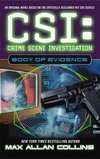
As far as background description goes in tie-ins, most authors are restricted in how far they can delve into the characters, unless they are merely restating backstory that’s already been revealed on the series. The authors are expressly forbidden from breaking any new ground…from straying from the established franchise… which is, of course, a point of some frustration for writers toiling in the tie-in field. It was the hot-topic on a TV tie-in panel I participated in at WorldCon last year with, among others, CSI tie-in writer Max Alan Collins.
 On the panel, the authors of tie-ins (Buffy, Angel, CSI, and Star Trek among them) were upset that they weren’t given more freedom, that the show runners and studios exerted too much control. I was the lone, unpopular voice on the panels arguing for the producers. If a series is currently in production, its the showrunners perogative to create backstories for the characters, to decide what aspects of their personalities should be explored. The TV tie-in writer is, in many respects, like a freelancer contributing a script to the series. They shouldn’t start believing the characters belong to them. They don’t.

If we’re talking about a canceled series, the studio has a responsibility to protect the franchise and isn’t likely to let a tie-in writer forge much new ground and stray far beyond the boundaries established in the broadcast episodes. That said, I think the many STAR TREK novels have created a mythology, histories and a time-line that extends beyond that established in the many TV series and movies. But those novels are also closely overseen by the studio licensing department. And yet, there’s still plenty of room for the writer to have a distinct voice. Reasoner recalls reading one tie-in in particular…
When I read Avallone’s MAN FROM U.N.C.L.E. novel (bought brand-new off the paperback rack at Buddie’s Supermarket) as a 12-year-old, I realized for the first time that a writer could have such a distinctive voice that his work can’t be mistaken for anyone else’s. And I liked that voice well enough so that for a long time after that, I picked up every Avallone novel I came across.
I’m lucky with the DIAGNOSIS MURDER novels (which Reasoner was kind enough to praise in a recent posting). Because I was an executive producer and principal writer of the show for many years, I’ve been given complete creative freedom by the studio (which controls the rights and licenses the characters to my publisher).  I’ve been delving into the characters in far more depth than most tie-ins are allowed to do. In fact, the fifth DIAGNOSIS MURDER book, THE PAST TENSE, is a first-person "flashback" to Dr. Mark Sloan’s very first homicide investigation, allowing me to explore aspects of his personality and his past we never touched on in the TV series.
But I’m currently in talks to write another series of TV tie-in books and I know, going in, that I will not have anything close to the kind of creative freedom I enjoy with the DIAGNOSIS MURDER novels.