Dishing on Disher

 I'm sure glad I recuperated in time to meet author Garry Disher today. I arranged to pick him up at his hotel and take him on a quick visit to Santa Monica before his 6 p.m. signing at the Mystery Bookstore.
Lee,
This one is for you, with thanks and admiration.
Garry Disher
For Lee Goldberg
If you're in the Bay Area, you should go see them. He's also speaking at the First Congregational Church in Berkeley that same day.
This and That
Sorry I have been absent from here lately. I have been absent from everything for the last two days, felled by a nasty combination of a stomach bug (that first crept up on me last weekend) and a bad back (that has plagued me for two weeks) that combined to keep me in bed and miserable. The first day I felt so lousy all I did was nap, sweat and shiver. But on the second day I continued my UK video binge and watched a WALLANDER, a LEWIS, two episodes of THE FIXER, the latest episode of series 2 of ASHES TO ASHES, three series 2 episodes of MOVING WALLPAPER, and an episode of MISSING.
Mr. Crider Isn’t Miserable

 Bill Crider really enjoyed MR. MONK IS MISERABLE, which will be coming out in paperback in a couple of weeks. He writes, in part:
If Monk is miserable, you can be sure I'll be happy reading about it. […] there's plenty of Monk's quirkiness, which I continue to find amusing. This is where the title of the book is somewhat misleading because before it's over, Monk has found something approaching pure happiness driving a motocrotte. Again, you'll have to read it for yourself, which is something I recommend the next time you need a good laugh, an entertaining mystery, and a tour of the Paris underground all for the same price.
Thanks, Bill!
This is My Life
Getting fired, in the form of a series cancellation, is a fact of life for people working in the TV industry. As an example, The Los Angeles Times reported yesterday on what it's like for the crew of the CBS series THE UNIT to be waiting, and wondering, whether their show is coming back.
If drama is life heightened, then Hollywood's bubble shows mirror much of America right now, where the specter of pay reductions, freezes and immediate unemployment is writ large. In the television industry, the phenomenon is an annual rite as network executives decide which series will be ditched to make room for new projects.
"What the country in general is going through, if you choose to work in Hollywood, you've accepted a life that is constantly like that," said executive producerShawn Ryan, who runs "The Unit" and created the FX cable channel's cop drama "The Shield."
[…]Executive producer Vahan Moosekian is as familiar with these employment ups and downs as anyone. His four years on "The Unit" is his longest stint on any show during his 33 years in the industry, stability he knows could easily be followed by years of unemployment. With the rise of reality TV and NBC's new 10 p.m. Jay Leno comedy show, there are fewer jobs in scripted television.
I know how Moosekian feels. For years, I used to dream about what it would be like to actually be on a show that came back for a second season. It seems like every show I was on would be canceled during it's first season, or if it came back, I would leave for one reason or another before it happened. It wasn't until DIAGNOSIS MURDER that I discovered what it felt like to be on a show for several years…though we were on the bubble for renewal, not just every season, but every mid-season as well.
What I’ve Read This Week

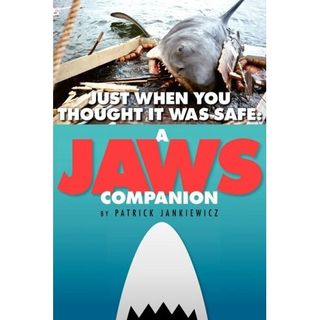 I’m a big fan of Bear Manor Media, a small press that publishes great books about television, film, radio and the stage. I have raved about their books here in the past (like the Encyclopedia of TV Spies and the 12 O’Clock High Logbook), so it pains me to have to say that one of their latest, Just When You Thought it Was Safe: A Jaws Companion is underwhelming.
When to Self-Publish
Karen Opas-Lanouette, a freelance editor and ghostwriter, believes it only makes sense to self-publish if you meet three criteria, which she's posted on LinkedIn. I think her list is great:
1) You have written a memoir or cookbook that you want to share with family and friends. Professional editing and cover design/interior layout are not an issue. A POD self-publisher like Lulu or iPublish is an inexpensive way to put a book into the hands of friends and family.
2) You have a successful business and a book will enhance your authority as an expert. You prefer the 50%+ of the cover price you will receive via this process than the 7-15% you will receive via traditional publishing. You can write the initial expenses off against marketing, and declare income as you hand sell books to clients and at lectures. In this case, it is worth the money to hire a professional editor, an experienced book designer, and create a combination of printed physical copies and a POD set-up with someone like Lightning Source.
3) The expenses involved in creating a professional quality self published book are worth it to you in the same way that going on a vacation is worth it–you are unlikely to make a profit, but the mental and emotional rewards of having your book out in the world, along with the statistically slender chance that your book will hit, make it worth the money.
That is one of the most-clearheaded, accurate, and helpful posts about self-publishing that I've read in some time. I agree with everything she's said. But I would add one more important criteria — self-publishing makes sense if you have written a non-fiction book and have a built-in sales and promotional platform. In other words, if you lead seminars, have a TV or radio show, teach a class, preach to a congregation, etc…a stage from which you can promote the book and a ready-made venue/audience for selling it yourself.
UPDATE: Jane Smith pointed me to this excellent post that makes some excellent points about self-publishing Here's a taste:
4) Nearly all self-published books sell in minuscule numbers. How many friends do you have? How many could you persuade to part with cash? Well, that's how many books you will probably sell. Unless you are a seriously brilliant and dedicated salesperson and are prepared not to write any more ever again because you will be selling, selling, selling. You will lose hair, weight (hmm, good idea), self-esteem and years off your life; you will gain wrinkles, bags, and new respect for book-led publishers. You will probably not make any money but if you do, you will be rightly proud of it. But too tired to do it again.
5) Whenever someone tells you that publishing is "broken", ask yourself who is saying this and why. Is it a published author? Is it an author who has won awards, received good reviews, has a genuine fanbase? Or is it someone who has either failed to get published or who has decided to make money out of other people's failure to do so?
6) When you hear about a self-published book becoming "successful", (and this does occasionally happen, but much less often than you are led to believe) realise that this success nearly always happens when a book-led publisher takes on the formerly self-published book. So, is that a self-publishing success or proof that publishing is neither dead nor the future?
Fascinating, Captain

 Not only is the new STAR TREK a brilliant and exhilirating re-boot of the franchise, it could serve as a text book for writers on how to update a beloved media property. JJ Abrams and his writers manage to pay affectionate and respectful homage to the original series and all of its spin-offs…while at the same time cleverly and elegantly freeing themselves from all that has come before.