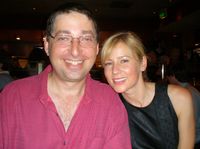
She-Wolf of Studio City

IMG_0484[1] I was on my way to lunch with my buddy Phoef Sutton, and waiting on the sidewalk to cross the street, when I heard a familiar voice behind me…one I hadn't heard in years. I turned around and there, sitting at an outdoor cafe with a friend, was actor Neil Dickson, who starred in She-Wolf of London, a syndicated series that Bill Rabkin and I wrote and produced in the early 1990s. It was a wonderful surprise. The last time I saw Neil was almost ten years ago, when he guest-starred in an episode of Martial Law, another series that Bill and I wrote & produced.  While I've aged and fattened, he has kept his stunning good looks. We only had a few minutes to chat, and share some She-Wolf memories, but I am looking forward to catching up with him again very soon.


My Favorite Child

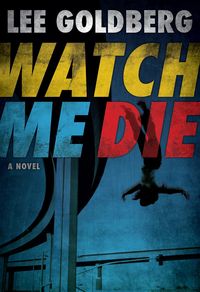
Copy of Watch Me Die_5   I’ve written thirty novels – eight of them Diagnosis Murder books and thirteen of them Monk tales – but my favorite out of them all is Watch Me Die, which was originally published in hardcover in 2005 under the title The Man with the Iron On Badge.

It’s about a guy who learns everything he knows about being a PI from reading books and watching TV shows. It's about the clash between fictional expectations/stereotypes and reality. The book is something of a spoof…and yet, at the same time, a straight-ahead crime novel full of explicit sex and violence. That shifting tone made the book a hard sell…because it didn't fit into a particular marketing niche. Is it a satire? Is it a PI novel? Is it a thriller?

Most of  the editors who rejected the book back in 2003 praised the writing but didn't see where it would fit in their publishing line.  There were two editors at major houses who loved it and wanted to acquire it…but  couldn't convince their superiors. Another wrote a LONG rejection letter, saying how much she loved it, that it was the best PI novel she'd ever read, and how it pained her not to be able to publish it. (In the mean time, I wrote a screenplay version of the book, which landed me the gig writing the Dame Edna movie. It never got made, but it was a very, very big payday for me and was my first solo screenwriting job outside of episodes of TV shows that I'd produced).

It was frustrating not being able to sell the book because I felt it was the best novel I'd ever written. I loved writing it and I very much wanted to write more about Harvey Mapes, the main character. I couldn’t complain too much, because I was having a lot of success with other books. Even so, this one meant more to me than the others. I approached my Diagnosis Murder & Monk editors at Penguin/Putnams about The Man with the Iron-On Badge…but as much as they liked me, and my work, they weren't willing to take the gamble.

Finally, after two years of  shopping the book, we took it to Thomson/Gale/Five,  which had a reputation for putting out fine mysteries…and for being a place  where  published authors can find a home for their "dropped" series and unpublished works.  It was an imprint run by writers (like founder Ed Gorman) and editors (like legendary book packager Martin Greenberg)  who truly loved books and appreciated authors. They produced handsome hard-covers that were respected and reviewed by the major industry publications. I had a great experience with them on The Walk (another book that was a hard sell that but went on, after it fell out of print, to sell 20,000 ebook copies in two years)  and I knew they would treat the book well.  6a00d8341c669c53ef00e553a33d7d8834-320wi

The downside with Five Star was that they paid a pitifully  low advance, primarily served the library market and had very limited distribution to bookstores.  Still, it was possible to win wide acclaim and impressive sales with a Five Star title. And I did. Here's a sample of the reivews:

"As dark and twisted as anything Hammett or Chandler ever dreamed up […] leaving Travis McGee in the dust." Kirkus, Starred Review

 “This was a witty, wonderful book,” Deadly Pleasures

“Goldberg delivers a clever riff on the traditional private eye novel, resplendent with witty and dark turns,” Knight-Ridder Newspapers.

“A fast paced, first person thriller about an under achiever who has to strive to be more than he ever thought he could be,” Permission to Kill

“Approaching the level of Lawrence Block is no mean feat, but Goldberg succeeds with this engaging PI novel,” Publishers Weekly

"Lee Goldberg bravely marches into territory already staked out by some fierce competition — Donald Westlake, Lawrence Block, the early Harlan Coben– and comes out virtually unscathed." The Chicago Tribune

"Goldberg has a knack for combining just the right amount of humor and realism with his obvious love for the PI genre and his own smart ass sensibilities. [The book] is a terrific read. Goldberg is the real deal and should be on everyone’s must read list." Crimespree Magazine

The book even got nominated for the Shamus Award for best novel by the Private Eye Writers of America (losing to Michael Connelly’s The Lincoln Lawyer)

And  although it sold well for Five Star, it failed to land a paperback or foreign rights sales…and went out of print in 2007. 

Last year, I re-released it as an ebook…where it has failed to gain much traction, despite several different covers,  lots of flogging on this blog, and a stage production by the legendary Firesign Theatre.

So now I have re-re-released it as Watch Me Die. And am doing more flogging.

I really, really want Watch Me Die to succeed.

I want it to be my bestselling book…by far. Not so much for the money, but because I am proud of it.

And if it does finally do well, I can justify to myself (and, more importantly, to my wife), investing the time to write the sequel. Or a string of sequels. I would like nothing better than to write as many Harvey Mapes books as I have Monks…or many more….because Harvey Mapes is a character and a voice and an attitude that I love.

So please, help me do that. Spread the word about Watch Me Die.   

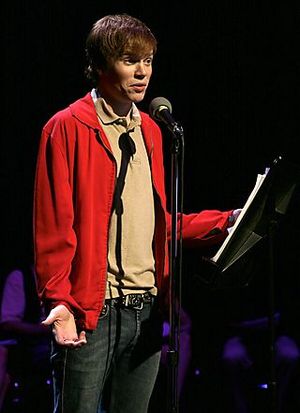
 (Pictured: Orson Ossman performing as "Harvey Mapes"  in the Firesign Theatre radio play/stage production, at the RiverPark Performing Arts Center in Owensboro, Kentucky )

What Does MWA Do?

I always feel guilty when I spend more time posting on someone else's blog than my own…which is what has been happening over the last few days. I have been cheating on you over at Joe Konrath's blog. He wrote a lengthy post castigating the MWA for not welcoming self-published authors as active members…so naturally I responded. A lot. But I think some of what I said, even without the context of the subsequent comment thread that prompted my remarks, is worth repeating here. 

So you can read Joe's post for yourself...then come back and read this. Go ahead. I'll wait.

Okay, good to see you back.

First, let me say, that I am speaking for myself, and not in any way for the MWA.

I know ebook self-publishing is changing everything. I am earning far more self-publishing my out-of-print backlist today than I am from my traditional contracts.

I know that MWA will inevitably have to address that side of the business….but I think MWA’s rules will evolve and that these recent changes, while too incremental for Joe and some others, were a necessary and significant first step. 

There are many good points in Joe's post. But his overall argument that MWA should exist to help authors sell books is too narrow.  MWA does a lot of great things — like supporting book festivals & writers conferences, running speakers groups, funding Writer Beware, taking on predatory publishing practices, etc, to support their members and non-members alike.

He likes to use International Thriller Writers as a yardstick for comparison to MWA.  He says they get it right where MWA doesn't.

I agree that ITW does some great things for its members that MWA doesn’t…and vice-versa.

However,  the last time I checked, ITW had only let in three or four self-published authors as active members. Self-published authors are welcome to join ITW as associate members which, by the way, is also the case with MWA.  

I haven't seen ITW announce that they are now including e-publishers and POD publishers as Approved Publishers…and books exclusively published in e-format or POD as eligible for Active Membership…but MWA has.

The ITW, unlike MWA, is utterly beholden to, and dependent upon, “legacy publishers.” The reason members don't have to pay dues is because the ITW lives off the royalties it earns from its anthologies published by Harlequin, among others. If any organization exists to support the old guard, it's ITW.

While they are a different organization, they are also, in many ways, exactly the same. They also have an approved publishers list, they also rely upon "legacy publishing" as a primary yardstick for professional publication, and they also have a large associate membership etc.

So I'm not seeing how ITW is getting it right where MWA isn't.  

There are some also significant differences between the two organizations worth noting…

  • MWA took a strong, and very public stand against Harlequin that other organizations quickly followed (notably not ITW, perhaps because the anthologies that keep their organization afloat are published by Harlequin). MWA ultimately convinced Harlequin to substantially change a program that struck many as predatory and unethical.
  • MWA delisted and strongly condemned Dorchester for their miss-treatment of their authors…and other organizations quickly followed MWA's lead (notably, ITW has remained silent).
  • MWA has teamed up with SFWA to support Writer Beware to expose countless publishing and literary agency scams that prey on writers (What is ITW doing to educate writers about predatory publishing practice? Zero).

I am a proud ITW member, and they have been very, very smart in how they have positioned themselves and how they are helping published writers get more traction. But MWA is about much more than that. 

MWA's stand against Harlequin, for example, was geared entirely towards preventing unpublished authors from getting taken advantage of…and that's a big part of MWA’s mission…and why they partnered with SFWA to support Writer Beware. 

Not only that, but MWA makes substantial financial contributions to scores of big and small book fairs all across the country (including contributing to NY is Book Country, the LA Times Festival of Books, the Miami Book Fair, etc.) to help keep them afloat because they feel supporting writers, booksellers, and the love of reading is important. 

There are also countless workshops and speakers programs that MWA and its local chapters do in high schools, libraries, book fairs, and at community events nationwide to educate writers about writing, publishing, and the mystery genre.

Those efforts help ALL WRITERS published and unpublished, self-published and traditionally published, and teaches aspiring writers new skills, and encourages a love of reading and books that helps authors no matter whether they are published electronically or in print. 

MWA doesn't just exist to help authors promote and sell their books (though MWA promotes its authors with a strong presense at trade events like BookExpo, Printers Row, and ALA, etc.).

They put an enormous effort into protecting aspiring writers… people who ARE NOT MEMBERS… from getting ripped off by publishing scams and con artists who prey on their hopes, desperation, and naivete.

MWA does that by educating its members  as well as through the very existance of its Approved Publishers list (publishers are thoroughly vetted by the MWA’s membership committee and held to a set of high professional standards…as listed in our Approved Publishers criteria).

MWA also uses its might, which comes from its size and the respect it has earned, to leverage big publishers into halting unethical and predatory practices. That doesn't prop up the status quo…that's something MWA does, at great cost in time and money, because it's mission is more than helping successful writers be more successful. Again…all of this is done by volunteer writers. 

MWA's goals, and responsibilities, and what it does for members and non-members alike, are far broader than simply helping it’s members sell books and promote themselves.

Bottom line:  MWA is far, far more than just the self-publishing issue.

But you could argue, as Joe did in the comments to his post, that  “teaching writing craft is a good thing, but how do my dues benefit me when they are being used to teach some newbie how to add conflict to his first short story?”

That’s a fair question. I can only answer for myself.

I pay my $95 in dues not just for what MWA can do for me… but what it does for others. I get something important out of that. You may not. That's fine. 

You may not take any pride or pleasure knowing that your dues go towards teaching a newbie writer about conflict, story structure or dialog…but I sure as hell do. 

You may not take any pride that your money is going to support efforts to prevent publishers from engaging in predatory and unethical conduct towards writers. I do.

You may not see any personal benefit in your money going towards exposing publishing scams and protecting writers from them. I do.

What MWA does is not always for you. Sending authors to libraries or schools may not help you sell books…but it might inspire one kid in the audience to write…or spark a love of reading….or bring new readers to the mystery genre. 

I think that's a great use of my dues money. I get a personal benefit out of it that isn't calculated in books sold.

Actually, Joe and I agree on more than we disagree, though some who do not know us well would not know that from reading this long-winded post (or his).

I am the chair of the MWA membership committee, so I played a big part in crafting these rules.

I am a published author…but I am also a self-published author.

So I see this issue from both sides. 

I have said it before, and I will say it again…the MWA's eligibility criteria are a work-in-progress that will change as the industry does. 

Accepting novels published exclusively as ebooks or POD as making the author eligible for Active Membership is a big, and important step…one other writers organizations, including ITW, the Authors Guild, Horror Writers, etc. have yet to make. 

I am sure there will be other steps to come.


I Love the Mystery Guild

Well, their readers anyway, one of whom clued me in to all the great reviews that MR. MONK ON THE ROAD is getting over there…

Fantastic as always      
If you want some laughter with you mystery then this is the series for you. I have all of them thus far, and will be getting Mr. Monk On the Couch(June 7). Such a lovable, likable bunch of chararcters makes this an easy series to read. Highly recommend. Hope this series will be around a very long time. Pleeeaase Lee Goldberg, keep writing them! Reviewer: William H

Already can't wait for the next one!      
It seems that Lee Goldberg just can't write them fast enough for me. I LOVE this series. Oh well, I can go to my keeper shelf and start all over again. But really, hurry up and get here June(Mr. Monk on the Couch). Can't recommend this series highly enough. If you're missing this series you really are missing a great pleasure. Reviewer: Bridgette H

Another Winner!      
I can't believe Lee Goldberg's record. He has never let me down with this fantastic series. I'm already all sorts of anxious for the next book. If you want a break from the stresses and frustrations of everyday life then read about Mr. Monks stress and frustration in dealing with the everyday world. You'll do a lot of smiling and laughing, and you know that's a good way to ease and escape your own tensions. I'll be rereading this whole series(on my keeper shelf)pretty soon. Highly recommend! Reviewer: Percy P

Yet another winner!      
Loved it, as I have every book in this great series. Monk, Ambrose, and Natalie, what a trio! It was fun for the reader everywhere they stopped. I was worried about the fate of the books with the series ending. Guess I should have known better. Lee Goldberg is an incredible writer and I'm so glad that the Monk series is continuing with the usual laughs and great mysteries. If your not reading this series yet you don't know what you are missing. Highly recommend. Reviewer: Daniel H

After seeing these, I naturally went back and looked to see how my previous MONK books were received…and I am flattered to say they were met with the same, enthusiastic response. Thank you Mystery Guild readers!


Cover Story

Watch Me Die_5 One of the great things about the ebook format is that it allows you to quickly change your product to adapt to the  marketplace. I learned this lesson when I changed the covers and titles of my .357 VIGILANTE series (to THE JURY SERIES) …and sales immediately and dramatically increased as a result.

That made a big impression on me.

I have since experimented with changing the covers, and in some cases the titles, of some of my other work. Almost always, I have seen a marked improvement in sales. In fact, I recently changed the cover of the JURY SERIES again and sales of that book have more than doubled.

So I now I'm hoping to perform that same magic on THE MAN WITH THE IRON ON BADGE, perhaps most my widely acclaimed novel when it was released in hardcover a few years ago…and yet one of my weakest performing ebook titles today. I have tried changing the cover multiple times…and while that has always helped, the uptick hasn't been much. 

I think the problem is the title. It's awkward, dated, and dull.

So I have decided to take a more radical step…this time I am changing the title and the cover.

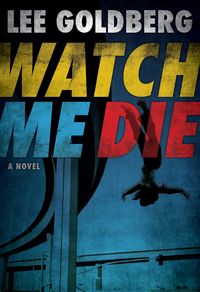
It's now WATCH ME DIE.

It's a much more active title and the cover, by Jeroen Ten Berge,  is far more vivid and compelling than any of the others. The image is taken from a key scene in the book.

I predict that sales will go way up…what do you think? Here's the evolution of the covers…

The McFarland &  Company cover for the original, hardcover edition:

MwIOB_lg
The First Kindle Edition, made by yours truly:

BADGE 3
The Second Kindle Edition, designed by Carl Graves:

GOLDBERG_Iron_On_Badge_FINAL
And, once again, the new cover by Jeroen Ten Berge:

Watch Me Die_5


The Rap on Me and Monk

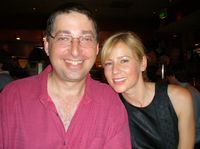
Lee Goldberg and Traylor Howard-2 Kirkus Reviews is spotlighting the MONK books today in an interview with yours truly conducted by J. Kingston Pierce, who also runs the excellent Rap Sheet blog.  Here's a taste:

The series focused primarily on Adrian Monk, but your books are told from Natalie’s first-person perspective. What affect has that had on your storytelling?

I think it humanizes Monk. It gives us a necessary distance and, at the same time, a perspective to frame what we’re seeing. In a way, Natalie’s eyes become the replacement for the TV screen that’s was usually between us and Adrian Monk. Also, a little Monk goes a long way. You can overdo the joke and all the obsessive/compulsive stuff. By telling the stories from Natalie’s point of view, we aren’t with him all the time. We get some space, a breather from his shtick, and I think that’s important.

It’s also a conscious homage to Sherlock Holmes and Nero Wolfe, who were seen as well through the eyes of their assistants.

The interview was huge, and all the stuff that Kirkus couldn't use, Pierce has posted on his blog.  For instance,we expanded on the previous question…

JKP: You’ve said before that telling these stories from the first-person viewpoint of Monk’s assistant, Natalie Teeger (played on screen byTraylor Howard), rather than from a third-person perspective more similar to what we saw on television, “humanizes Monk.” Could you explain that further?

LG: [I]t’s allowed me to add an emotional resonance to the storylines that goes beyond just Monk’s eccentricities and the solving of puzzling mysteries. The underlying theme of the book (and yes, there always is one in each tale) is often reflected in whatever is happening in Natalie’s life. Her personal story frames the way in which she perceives the mystery and reacts to Monk, so it’s all of a piece. It’s allowed me to make her a deeper, more interesting, and more realistic character. By doing that, I ground the story in what I like to think of as “a necessary reality.”

Without that reality, Monk would just be a caricature and cartoon character. Natalie humanizes Monk and makes the world that the two of them live in believable to the reader. Through her, we are able to invest emotionally in the story. Without that crucial element, I believe the books would have failed.

MR. MONK ON THE COUCH is out today!

MM on the Couch.revised_2 My 12th original MONK novel, MR. MONK ON THE COUCH, is out today in hardcover…and as an ebook, too. 

This is the second book set after the finale of the TV series and takes the characters in some new directions, none more so than Monk's assistant and the book's narrator, Natalie Teeger. Over the last few books, she's begun to realize that not only does she enjoy detective work, but she's actually is pretty good at it. But it hasn't been easy to prove herself when she's constantly paired up with a brilliant detective who often solves crimes on-the-spot. In this book, she finally gets the chance…and really comes into her own as a detective (which I take it to the next level in the book I'm just finishing now, MR. MONK ON PATROL). 

Like all of my MONK books, there are lots of little “standalone” mysteries that Monk solves while investigating the major, over-arching mystery of the novel. However, this time the central mystery is less of a whodunit than it is a “what the hell is going on?”

MR. MONK ON THE COUCH is also grittier than any of my previous Monk books…but nothing too extreme. It’s still very much a MONK,  with lots of laughs, but also with a lot more going on and a slightly harder edge.  Plus there’s even a subplot involving Monk’s brother Ambrose, picking up where his story left off in MR. MONK ON THE ROAD.

All in all, there's a lot going on in MR. MONK ON THE COUCH and I hope that you enjoy it.